

How Are Business Surface Water Drainage Charges Calculated?

If your business pays for surface water drainage, how do you know whether the charge is correct? This is where things become more technical.
There is no single surface water drainage tariff covering every UK business. The charging methodology depends on factors including the wastewater wholesaler serving the property and its applicable charging scheme.
For many commercial properties, one of the most important factors is site area.
Understanding Site-Area Charging
Ofwat confirms that a number of water companies use site-area-based charging for surface water drainage.
In simple terms:
Chargeable Site Area → Charging Band/Tariff → Annual Drainage Charge
This means a larger commercial property can potentially pay considerably more than a smaller one.
But there is an important distinction:
The total size of a property isn’t necessarily the same as its chargeable drainage area.
That is where businesses need to look more closely.
How to Check Your Surface Water Charge
Start with your water bill.
Identify charges described as:
- Surface Water Drainage;
- SWD;
- Site Area Drainage;
- Property Drainage; or
- Highway Drainage.
Then establish which wastewater wholesaler serves the property and the charging methodology being applied.
Next, establish the actual site area.
This can involve information from:
- site plans;
- lease plans;
- architectural drawings;
- drainage plans;
- mapping;
- aerial imagery; and
- physical measurements.
You can then start examining how individual areas of the property drain.
Calculate the Drainage Footprint
A useful way of approaching a commercial site is to divide it into separate areas.
For example:
| Area | Size | Drainage |
|---|---|---|
| Warehouse roof | 5,000 m² | Public sewer |
| Car park | 3,000 m² | Soakaway |
| Service yard | 2,000 m² | Public sewer |
| Landscaped area | 2,000 m² | Natural drainage |
The total site is 12,000 m².
But that doesn’t automatically mean all 12,000 m² should be treated identically for surface water charging.
The important technical question is:
Which areas ultimately contribute surface water to the public sewer?
Follow the Water
An impermeable surface does not automatically mean that its rainwater enters the public sewer.
A car park, for example, might discharge into an infiltration system.
Likewise, having private drainage doesn’t necessarily mean the water avoids the public sewer.
Consider:
Car Park → Private Drain → Public Sewer
The water still ultimately reaches the public network.
Compare that with:
Car Park → Drainage Channel → Soakaway → Ground
The drainage destination is fundamentally different.
For this reason, a proper assessment needs to establish the final destination of the surface water, rather than simply identifying drains on the property.
Common Reasons Charges Can Be Wrong
Problems can arise where:
- the recorded site boundary is incorrect;
- the recorded area is wrong;
- land has been sold or divided;
- a site has been redeveloped;
- soakaways haven’t been accounted for;
- drainage arrangements have changed;
- naturally draining areas have been incorrectly assessed; or
- historical information no longer reflects the current property.
Ofwat specifically recommends checking whether the estimated site area is correct and whether areas that drain naturally have been included.
Could You Be in the Wrong Charging Band?
This can be particularly important under banded site-area charging.
Suppose a business is currently assessed on a 15,000 m² drainage area.
A technical review establishes that a significant part of the property drains through qualifying alternative arrangements and the corrected chargeable area is materially lower. If that correction moves the property into a different charging band, the annual cost could fall.
The potential saving should therefore be calculated using the specific wholesaler’s charging methodology, rather than applying a generic national £/m² figure.

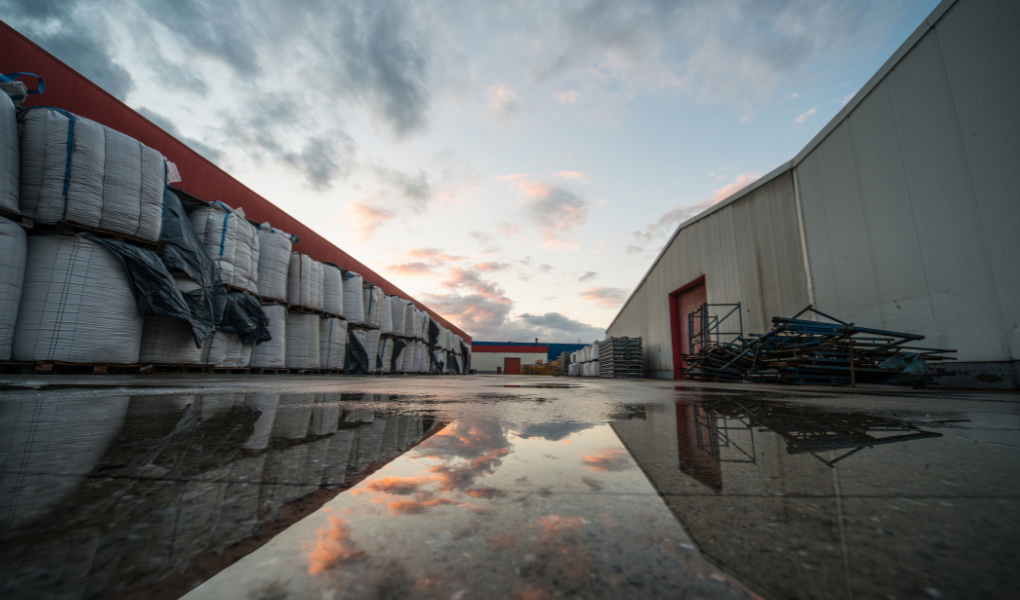
What Are Surface Water Drainage Charges? A Guide for UK Businesses
Surface water drainage is one of the most commonly misunderstood charges on a business water bill.
Unlike metered water charges, it isn’t necessarily related to how much water your business consumes. Instead, surface water drainage (SWD) is the charge associated with rainwater from your property entering the public sewer network.
For businesses with large roofs, car parks, loading yards and other hard surfaces, this can become a significant annual cost.
What Is Surface Water Drainage?
When rain falls onto a commercial property, it has to go somewhere.
Rain falling onto roofs, car parks and hardstanding may enter drains that eventually connect to the public sewer system. The wastewater wholesaler has to provide infrastructure capable of receiving and managing that water.
This creates the surface water drainage charge.
A simple example is:
Rain → Roof → Gutter → Drain → Public Sewer
However, not every property drains this way.
Rainwater could instead enter a:
- soakaway;
- infiltration system;
- Sustainable Drainage System (SuDS);
- watercourse;
- rainwater harvesting system; or
- other private drainage arrangement.
Where water does not ultimately enter the public sewer, this can potentially affect how the property should be charged.
Ofwat advises businesses to check whether areas that drain naturally have been included within their chargeable site area.
Who Is Most Affected?
Surface water drainage deserves particular attention where a business occupies a large physical site, regardless of how much mains water it consumes.
Examples include:
- warehouses and distribution centres;
- manufacturing sites;
- retail parks and supermarkets;
- industrial estates;
- schools and universities;
- hospitals;
- hotels and leisure facilities;
- vehicle depots; and
- large offices with extensive car parking.
Consider a warehouse using relatively little mains water but occupying a 20,000 m² site.
Its water consumption may be modest, but thousands of square metres of roof, yard and parking could generate significant quantities of surface water.
This is why businesses should not assess their water costs purely by looking at consumption.
Surface Water Drainage vs Highway Drainage
These charges are easily confused.
Surface water drainage relates to rainwater from your property entering the public sewer.
Highway drainage relates to rainwater from public roads and highways entering the sewer network.
Reducing or removing surface water drainage from a property does not therefore automatically remove highway drainage charges.
Why Should Businesses Check Their Charges?
The information used to calculate a property’s drainage charges may not always reflect what is happening on the ground today. Properties are extended. Land is sold. Car parks are resurfaced. Drainage systems are altered. Soakaways are installed. Buildings are demolished. If the charging information isn’t updated accordingly, the business could potentially continue paying based on an outdated assessment.
For larger businesses and multi-site organisations, even relatively small inaccuracies can accumulate into substantial unnecessary expenditure. The first question is therefore simple:
Where does the rainwater from your property actually go?
If the answer doesn’t match the assumptions behind your water bill, the charges may be worth investigating.
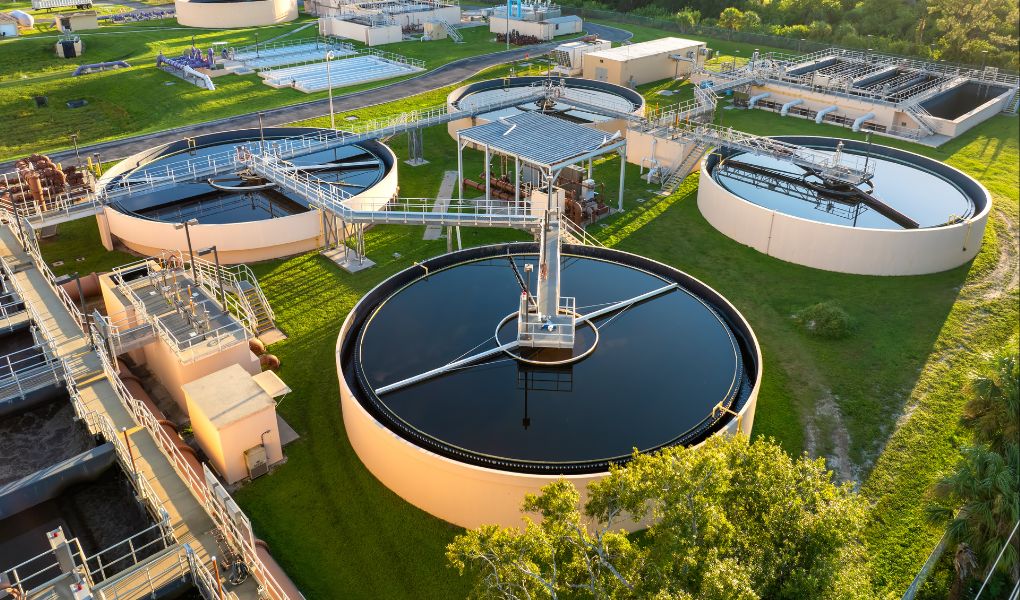
How Do Water Companies Forecast Demand – And Why Should Your Business Care?
When most businesses think about utilities, water demand is often overlooked. Unlike energy, where usage and costs are closely monitored, water consumption can remain hidden until a bill arrives or a leak becomes a costly problem.
However, the same metrics water companies use to forecast demand can provide valuable insights for businesses looking to reduce costs, improve efficiency, and ensure they’re on the most suitable water contract.
Terms such as ADD, MDD, PCC, and WRMP may sound technical, but understanding them can help organisations better manage consumption, identify waste, and make more informed decisions about their water services.
Let’s take a look at what they mean and why they matter.
What Is Water Demand?
Water demand is simply the amount of water expected to be used over a given period.
For businesses, understanding demand is important because it can help:
- Identify unusually high consumption.
- Detect leaks or operational inefficiencies.
- Forecast future utility costs.
- Support sustainability targets.
- Ensure the right water tariff or contract is in place.
The more accurately you understand your water usage profile, the easier it becomes to control costs.
What Does ADD Mean?
ADD stands for Average Daily Demand.
This is the average amount of water used each day over a specified period, usually a year.
Think of ADD as your business’s typical daily water requirement.
Understanding ADD allows businesses to:
- Benchmark usage across sites.
- Track trends over time.
- Measure the impact of efficiency projects.
- Forecast annual water expenditure.
For multi-site organisations, ADD can quickly highlight locations that are consuming more water than expected.
What Does MDD Mean?
MDD stands for Maximum Daily Demand.
This represents the highest level of water use recorded on a single day.
For businesses, MDD can reveal important operational patterns, such as:
- Seasonal peaks in activity.
- Irrigation requirements.
- Manufacturing process demands.
- Unexpected spikes caused by leaks or equipment faults.
Understanding MDD can help ensure your water supply arrangements align with your operational requirements while also identifying opportunities to smooth demand and reduce waste.
Why Is MDD Important?
Many businesses focus on average consumption, but peak demand often tells a different story.
A site with a relatively low ADD but frequent spikes in usage may have hidden inefficiencies or operational issues that would otherwise go unnoticed.
Monitoring MDD can help businesses:
- Investigate abnormal consumption events.
- Improve operational planning.
- Reduce unnecessary water use.
- Better understand site performance.
In some cases, reducing peak demand can contribute to lower overall costs and improved efficiency.
What Is PCC?
PCC stands for Per Capita Consumption.
This measures the average amount of water used by each person per day.
For commercial organisations, PCC can be adapted to assess water use per employee, resident, student, guest, or customer depending on the sector.
PCC is particularly useful because it allows businesses to compare performance fairly, regardless of site size.
For example:
- Two office buildings may use similar volumes of water.
- But if one has half the number of employees, its PCC will be significantly higher.
This type of analysis helps identify sites where water-saving opportunities may exist.
Why Do Businesses Benefit From Tracking PCC?
Monitoring PCC can help organisations:
- Benchmark sites against industry averages.
- Support ESG and sustainability reporting.
- Identify inefficient facilities.
- Measure the success of water-saving initiatives.
- Reduce operational costs.
As environmental reporting becomes increasingly important, understanding water use on a per-person basis is becoming a valuable management tool.
What Is a WRMP?
WRMP stands for Water Resources Management Plan.
These are long-term plans developed by water companies to ensure there will be enough water available for future demand.
WRMPs consider factors such as:
- Population growth.
- Climate change.
- Future water demand.
- Available water resources.
- Infrastructure investment.
While WRMPs are primarily produced by water companies, they can provide useful insight into future water availability and potential pressures affecting businesses in specific regions.
How Do ADD, MDD, PCC and WRMPs Work Together?
These measures each provide a different perspective on water consumption.
PCC
How much water each person uses.
ADD
Your typical daily water demand.
MDD
Your highest demand days and operational peaks.
WRMP
The wider picture of how future supply and demand will be managed.
Together, they help businesses understand not only how much water they use, but how efficiently they use it and where opportunities for improvement may exist.
Why Understanding These Metrics Can Save Your Business Money
Many organisations don’t have a clear picture of their water consumption patterns.
Without that visibility, businesses can end up:
- Paying for water they don’t need.
- Missing hidden leaks.
- Operating inefficient equipment.
- Struggling to benchmark sites.
- Sitting on unsuitable contracts or tariffs.
By analysing usage through metrics such as ADD, MDD and PCC, businesses can make more informed decisions, reduce waste, and potentially lower their water costs.
How Wodr Can Help
Understanding water data is one thing. Turning it into actionable savings is another.
Wodr helps businesses gain greater visibility of their water consumption by analysing usage patterns, identifying anomalies, and highlighting opportunities to improve efficiency.
By assessing metrics such as Average Daily Demand (ADD), Maximum Daily Demand (MDD) and Per Capita Consumption (PCC), WODR can help organisations:
- Identify leaks and unnecessary consumption.
- Benchmark site performance.
- Reduce water costs.
- Improve sustainability reporting.
- Understand future demand requirements.
- Ensure they’re on the most appropriate water contract for their usage profile.
With better data comes better decisions—and ultimately, lower costs, improved efficiency, and greater control over one of your most overlooked utilities.
What Is a SPID and Why Does Your Business Need to Know About It?
If you’ve ever looked at a business water bill and come across the term SPID, you may have wondered what it means and whether it’s important.
The short answer? Yes.
A SPID is one of the most important pieces of information linked to your business water supply. Understanding what it is can help you manage your water services more effectively, resolve billing issues faster, and make switching water retailers much simpler.
What Is a SPID?
SPID stands for Service Provider ID.
Every eligible business water supply point in England’s non-household water market has its own unique reference number.
Think of it as a postcode for your water connection. A postcode identifies a location, while a SPID identifies a specific water or wastewater supply point.
Your premises may have:
- A water supply identifier.
- A wastewater identifier.
- Or both.
The central market database stores these numbers, and water retailers and wholesalers use them to identify services accurately.
Why Does It Matter?
This identifier acts as the primary reference for your business water account.
It helps retailers and wholesalers:
- Link bills to the correct property
- Match meter readings to the right supply point
- Maintain accurate usage records
- Manage accounts efficiently
- Complete supplier switches smoothly
Without the correct reference number, businesses can struggle to verify supply details or resolve account issues.
How Does It Affect Your Water Bills?
The identifier does not determine how much you pay, but it plays a vital role in billing accuracy.
It connects to:
- Property details
- Meter information
- Water consumption records
- Charging arrangements
- Supply services
When errors occur, businesses may face:
- Incorrect bills
- Duplicate charges
- Missing consumption data
- Delays during supplier switches
- Difficulties resolving disputes
Access to the correct information helps businesses and retailers identify and fix problems more quickly.
When Do Businesses Need Their SPID?
Switching Water Retailers
When changing suppliers, the SPID allows the new retailer to identify the exact supply points that need to be transferred.
Managing Multiple Sites
Businesses with several locations often use SPIDs to track and manage each site’s water services individually.
Querying Bills
If you believe there’s an issue with a bill, providing the SPID helps customer service teams locate the correct supply information faster.
Reviewing Water Usage
SPIDs are used to connect usage and meter data to specific premises, making it easier to analyse consumption patterns.
Where Can You Find Your SPID?
You can usually find your SPID on your business water bill.
Look for labels such as:
- SPID.
- Supply Point ID.
- Water SPID.
- Wastewater SPID.
If you cannot find it, your water retailer can provide the information.
How Wodr Helps Businesses Understand Their Water Data
For many businesses, water billing and supply information can feel unnecessarily complicated.
That’s where Wodr helps.
Wodr gives businesses greater visibility into their water services, helping them understand the data behind their accounts and make informed decisions.
With Wodr, businesses can:
- Gain clearer insight into water usage and supply information.
- Identify potential billing anomalies.
- Better understand site-level water data.
- Support retailer switching processes.
- Manage multiple properties more efficiently.
- Access key information needed to make smarter water management decisions.
Whether you’re reviewing your current water arrangements, investigating billing questions, or simply trying to understand your supply details, having access to accurate SPID information is an important first step.
Get In Touch
A SPID may look like just another reference number on your water bill, but it’s actually a critical identifier that keeps your business water services running smoothly.
Knowing your SPID can help you resolve issues faster, switch retailers more easily, and gain a better understanding of how your water services are managed.
If you’re looking for a simpler way to understand and manage your business water data, Wodr can help bring clarity to the process.

UK Water Utilities Glossary: A Complete Guide to Water Industry Terms & Acronyms

Welcome to our UK Water Utilities Glossary, a comprehensive A–Z guide to the terminology, acronyms, and technical language used across the water industry. Whether you’re a utility professional, consultant, regulator, developer, or simply looking to better understand the sector, this glossary provides clear and concise definitions of common water utility terms. From AMP, Ofwat, and WRMP to leakage, abstraction, wastewater treatment, and smart metering technologies such as AMR and AMI, you’ll find straightforward explanations to help you navigate the complex world of UK water and wastewater services.
A
Abstraction
The removal of water from rivers, reservoirs, lakes, or groundwater sources for public supply, industry, or agriculture.
Abstraction Incentive Mechanism (AIM)
An Ofwat incentive that encourages water companies to reduce abstraction from environmentally sensitive water sources.
Abstraction Licence
Permission granted by the Environment Agency allowing a company to take water from a natural source.
Active Leakage Control (ALC)
The process of proactively finding and repairing leaks in the water network.
ADD (Average Daily Demand)
The average volume of water supplied or consumed per day over a year. ADD is calculated by dividing total annual demand by the number of days in the year and is commonly used for long-term planning and forecasting.
ADPW (Average Day Peak Week Demand)
The average daily demand during the highest demand week of the year. ADPW is a key metric in water resource planning as it reflects sustained periods of elevated demand, typically occurring during warm, dry weather.
AMI (Advanced Metering Infrastructure)
A more advanced form of smart metering that allows two-way communication between water meters and utility systems. AMI supports near real-time consumption data, leak alerts, remote diagnostics, and customer usage insights.
AMP (Asset Management Period)
The five-year regulatory planning and investment cycle for UK water companies.
AMR (Automatic Meter Reading)
A technology that enables water meter readings to be collected remotely without requiring a meter reader to visit the property. AMR systems typically transmit consumption data via radio signals to utility systems, improving billing accuracy and operational efficiency.
Aquifer
An underground layer of rock or gravel that stores groundwater.
Aquifer Storage Recovery (ASR)
A process of storing water underground for future use.
Asset Health
A measure of the condition and reliability of infrastructure assets.
Asset Inventory (AI)
A record of utility assets, including condition, size, age, and replacement value.
Available Headroom (AH)
The difference between available water supply and forecast demand.
B
Baseline Demand Forecast
A forecast of future water demand based on current policies and trends.
Baseline Supply Forecast
The forecast of future water availability using existing infrastructure and licences.
Best Value Planning
A planning approach balancing cost, resilience, customer value, and environmental outcomes.
Biodiversity Net Gain (BNG)
An environmental requirement ensuring developments improve biodiversity overall.
Biosolids
Treated sewage sludge suitable for recycling, often used in agriculture.
Borehole
A deep shaft drilled into the ground to extract groundwater.
C
CAMS (Catchment Abstraction Management Strategy)
Environment Agency plans that manage water resources within a catchment.
CAPEX (Capital Expenditure)
Money spent on new infrastructure, assets, and major improvements.
Catchment
An area of land where rainfall drains into a common river, reservoir, or groundwater system.
Catchment Management
Activities undertaken to improve water quality and environmental performance at source.
CBA (Cost Benefit Analysis)
A method for comparing the costs and benefits of different investment options.
CCW (Consumer Council for Water)
The independent body representing water customers in England and Wales.
CHP (Combined Heat and Power)
Technology that produces electricity and heat simultaneously.
Climate Change Adaptation
Actions taken to prepare for future climate impacts.
Climate Change Mitigation
Actions taken to reduce greenhouse gas emissions.
Combined Sewer Overflow (CSO)
A structure allowing excess sewage and rainwater to discharge during heavy rainfall to prevent flooding.
Communication Pipe
The pipe connecting a water main to a property’s boundary.
Conjunctive Use
The coordinated use of surface water and groundwater resources.
Consumption
The volume of water used by customers.
Customer Side Leakage
Leaks occurring on private pipework after the utility’s responsibility ends.
D
Defra
Department for Environment, Food and Rural Affairs.
Deployable Output (DO)
The reliable amount of water available from a source or treatment works.
DG2
A performance measure relating to customers at risk of low water pressure.
DI (Distribution Input)
The amount of treated water entering the distribution network.
Distribution Main
A pipe that transports water to customers.
Distribution Losses (DL)
Water lost through leakage from mains, reservoirs, and associated infrastructure.
DMA (District Metered Area)
A defined network area where water flows are monitored to identify leakage.
D-MeX (Developer Services Measure of Experience)
An Ofwat metric measuring developer satisfaction.
DMUU (Decision Making Under Uncertainty)
A planning method used to assess future water resource risks.
DO (Deployable Output)
The reliable quantity of water that can be supplied under specified conditions.
DPC (Direct Procurement for Customers)
A process allowing third parties to deliver large infrastructure projects.
Drought Order
Government authorisation for exceptional drought measures.
Drought Permit
Environment Agency permission allowing temporary drought-related abstraction changes.
DWI (Drinking Water Inspectorate)
The regulator responsible for drinking water quality.
DWQ (Drinking Water Quality)
The safety and quality of public drinking water supplies.
DWF (Dry Weather Flow)
Wastewater flow measured during dry conditions.
DY (Dry Year)
A year where water resources are under significant pressure.
DYAA (Dry Year Annual Average Demand)
The average daily water demand expected during a dry year. This measure is used in Water Resources Management Plans (WRMPs) to assess the balance between water supply and demand under drought conditions.
DYCP (Dry Year Critical Period Demand)
The highest demand expected during the most critical period of a dry year, usually during prolonged hot and dry weather. DYCP is a key planning metric used to test the resilience of water supply systems under stress conditions.
E
EA (Environment Agency)
The environmental regulator for England.
EBSD (Economics of Balancing Supply and Demand)
An approach used to compare supply and demand-side solutions.
Economic Level of Leakage (ELL)
The point where the cost of reducing leakage exceeds the value of water saved.
Effluent
Treated wastewater discharged back to the environment (read more here).
Environmental Flow Indicator (EFI)
A flow threshold used to assess environmental impacts of abstraction.
Environmental Performance Assessment (EPA)
The Environment Agency’s performance ranking system for water companies.
ERI (Environmental Risk Index)
A measure of risk from drinking water quality failures.
F
Final Effluent
Fully treated wastewater discharged from a treatment works.
Flood and Coastal Risk Management (FCRM)
Management of flooding and coastal erosion risks.
G
Groundwater
Water stored beneath the Earth’s surface in aquifers.
Guaranteed Standards Scheme (GSS)
Standards requiring compensation when service levels are not met.
H
Hands Off Flow (HOF)
A minimum river flow below which abstraction must stop.
Habitats Regulations Assessment (HRA)
Assessment of impacts on protected habitats and species.
I
I&I (Infiltration and Inflow)
Groundwater or rainwater entering wastewater networks.
INNS (Invasive Non-Native Species)
Species that may damage ecosystems or infrastructure.
Integrated Water Resources Management (IWRM)
A holistic approach to managing water resources.
Interruption to Supply
A temporary loss of water service.
L
Leakage
Water lost from the distribution network before reaching customers.
LPD (Litres Per Person Per Day)
The average amount of water used by an individual each day. LPD is widely used to measure household water consumption and assess the effectiveness of water efficiency programmes.
M
MDD (Maximum Daily Demand)
The highest volume of water demanded in a single day during a defined period, usually a year. MDD is used by water companies to assess network capacity, treatment works performance, and infrastructure resilience during peak demand events.
Managed Aquifer Recharge (MAR)
The deliberate recharge of groundwater supplies.
MCA (Multi-Criteria Analysis)
A method for comparing options against multiple objectives.
Megalitre (Ml)
One million litres of water.
Meter Optant
A customer who chooses to have a water meter installed.
Minimum Residual Flow (MRF)
The minimum flow required in a river after abstraction.
MOEO-RDM (Multi-Objective Robust Decision Making)
An advanced planning approach used in regional water resource planning.
MOSL (Market Operator Services Limited)
Operator of England’s non-household retail water market.
N
Natural Capital
Environmental resources that provide benefits to society.
Natural Capital Assessment (NCA)
Assessment of environmental assets and ecosystem services.
Net Zero
Achieving a balance between greenhouse gas emissions and removals (read more here).
Non-Revenue Water (NRW)
Water supplied but not billed because of leaks, theft, or metering errors.
Nitrate Vulnerable Zone (NVZ)
An area designated as being at risk from nitrate pollution.
O
ODI (Outcome Delivery Incentive)
Financial rewards or penalties linked to company performance.
Ofwat
The economic regulator of the water sector in England and Wales.
Operational Expenditure (OPEX)
Day-to-day operating costs.
P
PCC (Per Capita Consumption)
The average volume of water consumed per person per day, typically expressed in litres. PCC is one of the most important performance indicators used by UK water companies to monitor customer demand and support demand reduction strategies.
PDD (Peak Daily Demand)
The highest short-term daily demand observed or forecast within a specific period. PDD is often used interchangeably with MDD, although some organisations use it to describe exceptional peak demand events.
Performance Commitment (PC)
A target agreed between Ofwat and a water company.
Potable Water
Water that is safe to drink.
Pressure Reducing Valve (PRV)
A valve used to manage network pressure.
PR19 / PR24
Ofwat price reviews setting performance and investment requirements.
R
Raw Water
Untreated water from natural sources.
Reservoir
A storage facility for water.
Resilience
The ability to withstand and recover from disruptions.
Rising Main
A pressurised wastewater pipeline.
S
SCADA (Supervisory Control and Data Acquisition)
Systems used to remotely monitor and control assets.
SEA (Strategic Environmental Assessment)
An assessment of environmental impacts of plans and programmes.
Service Reservoir
A treated water storage facility.
Sewer Flooding
Escape of wastewater from the sewer system.
SPS (Sewage Pumping Station)
A facility used to pump wastewater.
Storm Overflow
A permitted discharge point operating during heavy rainfall.
T
TOTEX (Total Expenditure)
Combined capital and operational expenditure.
Treatment Works (TW)
A site where water or wastewater is treated.
Turbidity
A measure of water cloudiness.
U
Unaccounted-for Water
Water losses not reflected in customer billing.
Unplanned Outage
Treatment capacity unavailable because of equipment failure.
W
Water Framework Directive (WFD)
Legislation protecting and improving water environments.
Water Recycling Centre (WRC)
Modern term for a wastewater treatment works.
Water Resource Zone (WRZ)
An area where water resources and demand are managed together.
Water Resources Management Plan (WRMP)
A long-term plan showing how a company will balance supply and demand.
Water Stress
A situation where water demand exceeds available resources.
Water Treatment Works (WTW)
A facility treating raw water to drinking water standards.
Wastewater
Used water from homes, businesses, and industry.
Wastewater Treatment Works (WwTW)
A site treating sewage before discharge.
WINEP (Water Industry National Environment Programme)
Environmental improvement obligations placed on water companies.
Z
Zone Metering
The measurement of flows within defined sections of the water network to monitor performance and identify leakage.
Still Not Following Our Water Utilities Glossary?
If reading through this Water Utilities Glossary is giving you a headache, you’re not alone. From AMP and TOTEX to WRMPs, leakage targets, and regulatory frameworks, the industry is packed with terminology that can quickly become overwhelming. That’s exactly why we’re here.
We’ve created this Water Utilities Glossary to help demystify the language of the water industry, but understanding the terminology is only the beginning. Our job is to cut through the complexity, translate technical concepts into clear actions, and help organisations navigate an ever-changing regulatory and operational landscape.
So while we’ve documented the jargon here, you don’t need to become an expert in it. Leave that to us. We’ll handle the acronyms, regulations, and technical detail—so you can focus on the decisions that matter.

What Is Smart Metering And How Can AMRs Benefit Your Business?
What is a smart metering? Do you need to do it? How can it help your business?
In this video, we talk all things smart meters, also known as an AMR. We’ll explain how they are transforming the way businesses manage water by providing near real-time usage insights, detects leaks early, reduce waste, and turns water from a fixed cost into a controllable expense.
Unfiltered Vlog | What Is Smart Metering And How Can AMRs Benefit Your Business?
If you run a business, get in touch with our team today to find out how a smart meter/AMR can make a real difference to your bottom line.
Get in touch with our team today to explore your options and take control of your business water—turning it into a strategic advantage, not just a cost.

Why Are Business Water Costs Rising?
Understanding How Water Costs Rising Affects Your Business
Why are business water bills rising in 2026? If you’ve noticed your costs creeping up, you’re not alone—and it’s not just a simple price hike.
In this video, we break down what’s really driving the increase in commercial water charges, from ageing infrastructure that needs major investment to stricter environmental regulations pushing up compliance costs.
Unfiltered Vlog | Understanding Why Business Water Costs Rising Will Affect You
If you run a business, this isn’t something to ignore. Understanding your contract, reviewing your current charges, and planning ahead could make a real difference to your bottom line.
Get in touch with our team today to explore your options and take control of your business water—turning it into a strategic advantage, not just a cost.