
How UK Polymer Manufacturers Can Achieve 30–50% Water Reuse Through Smarter Water Procurement And Reuse Strategies
Water reuse for polymer manufacturers is often framed as a technical challenge—new filtration systems, advanced treatment plants, or major capital projects. In reality, many UK manufacturers are already closer to achieving 30–50% water reuse than they think. The main barrier is rarely technology. It is how water is sourced, managed, and integrated across the site.
For polymer and plastics producers operating in the UK, improving water reuse is increasingly driven by three pressures: rising water and effluent costs, tighter environmental regulation, and the operational need to reduce production risk. The companies that are achieving high reuse rates are not necessarily the most technologically advanced—they are the ones with the most integrated water strategies.
This is where smarter procurement and water management approaches, including the use of water brokerage services, become critical.
Why Water Reuse Matters So Much For Polymer Manufactures
Polymer manufacturing is highly water-dependent, even when water is not part of the final product. It is used extensively in:
- Cooling systems for extruders, reactors, and compressors.
- Washing and cleaning processes.
- Steam and boiler feed systems.
- Effluent dilution and treatment processes.
Because production is continuous, even small inefficiencies in water use quickly scale into significant cost and operational exposure.
More importantly, water quality consistency directly affects:
- Product consistency and defect rates.
- Equipment scaling and corrosion.
- Downtime risk in continuous processes.
So water reuse is not just a sustainability initiative—it is a production reliability strategy.
What Leading Polymer Manufacturers Are Doing Differently
Facilities achieving 30–50% water reuse typically do not rely on a single breakthrough technology. Instead, they combine multiple smaller interventions into a connected system.
These usually include:
- Closed-loop cooling systems that reduce fresh water demand.
- Reuse of treated process water for non-critical applications.
- Internal water cascading (using water multiple times at different quality levels).
- On-site or hybrid treatment systems for effluent recovery.
- Tight control of water quality to enable reuse without production risk.
The key difference is integration. Water is treated as a managed resource flow across the site, not a set of disconnected utility inputs and waste outputs.
Why Many UK Polymer Manufacturers Are Not Yet There
Despite available technology, many UK polymer manufacturers still operate far below best-practice reuse levels. The reasons are rarely technical alone.
Common barriers include:
- Fragmented water procurement and multiple disconnected suppliers.
- Limited visibility of total site water flows.
- Trade effluent contracts that discourage reuse optimisation.
- Underutilised cooling and process water loops.
- Lack of internal expertise to design integrated reuse strategies.
In many cases, water is managed as a utility cost line rather than a production system input. This creates missed opportunities for reuse and optimisation.
The Hidden Opportunity: Procurement-led Water Optimisation
One of the most overlooked routes to higher water reuse is not engineering—it is procurement strategy.
Smarter water procurement can unlock reuse by:
- Aligning water quality supply to actual process requirements.
- Separating potable, process, and cooling water needs more effectively.
- Identifying over-specification (paying for higher quality water than required).
- Consolidating fragmented water contracts for better system visibility.
- Rebalancing abstraction, supply, and discharge arrangements to support reuse loops.
When water procurement is optimised, reuse opportunities become far easier to identify and implement because the system is no longer artificially constrained by legacy contracts or supplier boundaries.
So, What’s Wodr’s Role In Enabling Reuse?
In the UK, water brokers are increasingly acting as the bridge between manufacturers, utilities, and treatment providers. Their role is not simply cost negotiation—it is system integration.
A water broker can support polymer manufacturers by:
1. Mapping total water usage across the site
Many plants lack a full picture of where water enters, circulates, and exits. Brokers help establish this baseline.
2. Identifying reuse opportunities across processes
This includes:
- Cooling water reuse potential.
- Process water cascading opportunities.
- Effluent streams suitable for treatment and reuse.
3. Coordinating multiple providers
Reuse projects often involve utilities, treatment technology providers, and regulatory stakeholders. Brokers help align these parties.
4. Optimising trade effluent strategy
Effluent charges are often a major cost driver. Better segmentation and treatment can significantly reduce disposal volumes and costs.
5. Structuring commercially viable reuse pathways
Even when reuse is technically feasible, it must also be financially justified. Brokers help structure solutions that balance capital and operational costs.
Turning 30–50% Reuse Into A Realistic UK Polymer Manufacturers Target
Achieving high reuse rates does not typically require full site transformation. Instead, it comes from layering improvements across three areas:
1. Cooling system optimisation
Cooling systems are often the largest opportunity area. Even partial reuse in cooling loops can significantly reduce freshwater demand.
2. Process water reuse
Non-critical process steps can often use lower-grade or recycled water once quality controls are properly defined.
3. Effluent recovery and segmentation
Not all wastewater is equal. Separating and treating different effluent streams enables selective reuse rather than full disposal.
When these are combined under a coordinated water strategy, 30–50% reuse becomes achievable for many UK polymer plants.
The Commercial Case For Reuse In The UK
Beyond operational benefits, water reuse delivers clear financial advantages:
- Reduced abstraction and supply costs.
- Lower trade effluent charges.
- Reduced chemical treatment requirements.
- Improved energy efficiency in cooling systems.
- Lower exposure to future water price volatility.
In addition, regulatory pressure in the UK is increasing around environmental discharge standards and long-term water resilience. This makes reuse not just a cost-saving initiative, but a risk management strategy.
The gap between typical UK polymer manufacturers and leading global reuse performance is not primarily a technology gap—it is a systems gap.
Companies achieving 30–50% water reuse are not necessarily using radically different equipment. They are managing water as an integrated resource system rather than a fragmented set of utility contracts. Smarter water procurement, combined with coordinated reuse strategies and support from water brokerage services, allows UK manufacturers to unlock reuse potential that already exists within their operations. For many sites, the question is no longer whether 30–50% reuse is possible—but how quickly their water system can be reorganised to make it commercially and operationally viable.
Chemical Manufacturing Compliance: Navigating Water Regulations with Confidence
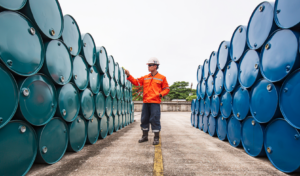
In today’s operating environment, chemical manufacturing compliance is no longer a narrow regulatory obligation—it is a strategic priority tied directly to risk, cost, and long-term viability. Water use and wastewater discharge sit at the centre of this challenge, as regulators, investors, and communities demand higher standards of environmental performance.
Chemical manufacturers are increasingly asking not just whether they comply today, but whether their chemical manufacturing compliance strategies are resilient enough for what is coming next.
Meeting Today’s Compliance Standards
At its core, chemical manufacturing compliance requires adherence to current water-use and discharge regulations. This includes permits, contaminant limits, and reporting obligations that often differ by region and facility.
The complexity is easy to underestimate. Multi-site operations must navigate varying regulatory frameworks, and even small inconsistencies in monitoring or reporting can create compliance gaps. Without standardised processes, maintaining reliable chemical manufacturing compliance becomes increasingly difficult.
To address this, leading companies are investing in continuous monitoring, structured audits, and clear accountability at site level—turning compliance into an embedded operational practice rather than a periodic exercise.
Water Treatment and Use in Chemical Manufacturing
Water is a central element in any chemical manufacturing process. It is used across multiple stages—from raw material dissolution and reaction media to equipment cleaning, cooling systems, and steam generation. It also plays a critical role in infrastructure, particularly in heat exchangers and closed-loop cooling circuits.
From a chemical manufacturing compliance perspective, this creates a dual responsibility: managing water quality entering the process (upstream) and treating effluent before discharge (downstream).
Upstream, untreated or poorly conditioned water can introduce contaminants that affect product quality, cause scaling or corrosion in equipment, and reduce process efficiency. Downstream, wastewater often contains complex mixtures of organic compounds, heavy metals, suspended solids, and residual chemicals that must be treated to meet discharge standards.
Technologies such as membrane filtration, reverse osmosis, biological treatment, and advanced oxidation processes are increasingly deployed to ensure that water leaving the site meets stringent environmental regulations. Effective integration of these systems is essential to maintaining consistent chemical manufacturing compliance.
Preparing for Change
Regulation is evolving quickly, and chemical manufacturing compliance must keep pace. Emerging contaminants, tighter discharge thresholds, and expanded transparency requirements are already reshaping expectations.
For manufacturers, this raises important questions about cost and operational impact. Will new standards require upgraded treatment systems? Will production processes need to adapt? How will these changes affect margins?
Organisations that anticipate regulatory shifts—rather than react to them—are better positioned to manage costs and avoid disruption. In this context, chemical manufacturing compliance becomes a forward-looking capability that supports long-term planning.
Managing and Recovering Waste in Chemical Manufacturing
Waste management is a critical part of chemical manufacturing compliance. The sector produces large volumes of waste, including hazardous materials like solvents, oils, acids, and process residues. These substances pose serious risks to human health and the environment if mishandled. Strict regulations govern their storage, transport, treatment, and disposal, requiring strong tracking and documentation systems. However, waste is not only a liability—it can also be an opportunity. Many manufacturers are adopting recovery and reuse strategies, such as solvent recycling, energy recovery, and extracting valuable by-products. By integrating waste recovery into operations, companies can cut disposal costs, reduce environmental impact, and strengthen overall compliance.
Risk Exposure in Chemical Manufacturing
Falling short on compliance carries consequences that extend well beyond fines. While financial penalties can be significant, the greater risks often involve operational shutdowns, delayed approvals, and increased regulatory scrutiny. Reputational impact is equally critical. Environmental performance is under closer examination than ever, and failures in chemical manufacturing compliance can quickly erode trust among customers, investors, and local communities.
As a result, companies are broadening their approach—evaluating not only current compliance status but also their exposure to system failures, process variability, and external disruptions.
Scaling Chemical Manufacturing Compliance Across Multiple Sites
Managing compliance at a single facility is challenging; doing so across multiple locations introduces a new level of complexity. Each site may operate under different regulatory conditions, making consistency difficult to achieve.
Traditional tools like spreadsheets and manual reporting processes often fall short in this environment. Increasingly, companies are adopting centralised digital systems that provide real-time visibility into water usage, discharge quality, and compliance status across all sites.
Standardising metrics and reporting frameworks allows organisations to compare performance, identify risks early, and ensure that chemical manufacturing compliance is maintained consistently across the enterprise.
Turning Chemical Manufacturing Compliance Into a Strategic Advantage
Although regulatory pressure is intensifying, it also creates an opportunity. Companies that take a proactive approach to chemical manufacturing compliance often uncover efficiencies, reduce waste, and improve operational performance.
More importantly, strong compliance practices enhance transparency and build trust with stakeholders. In a landscape where water is both a constrained resource and a regulatory focus, this can become a meaningful competitive differentiator.
Chemical manufacturing compliance is no longer just about keeping up with regulations—it is about staying ahead of them. Companies that integrate compliance into their broader strategy will be better equipped to manage risk, control costs, and succeed in an increasingly complex regulatory environment.
Wodr are an independent, specialist water broker supporting chemical manufacturers with a more streamlined approach to water management.
From optimising procurement and negotiating with retailers on your behalf, to identifying leaks and inaccuracies in your usage data, Wodr helps reduce cost and complexity. Through a robust data management system, they provide the visibility and control needed to simplify operations and support your wider chemical manufacturing compliance strategy.


